Peace of Mind: The 2026 Parent's Guide to Tracking GCSE Maths Progress with AI Dashboards
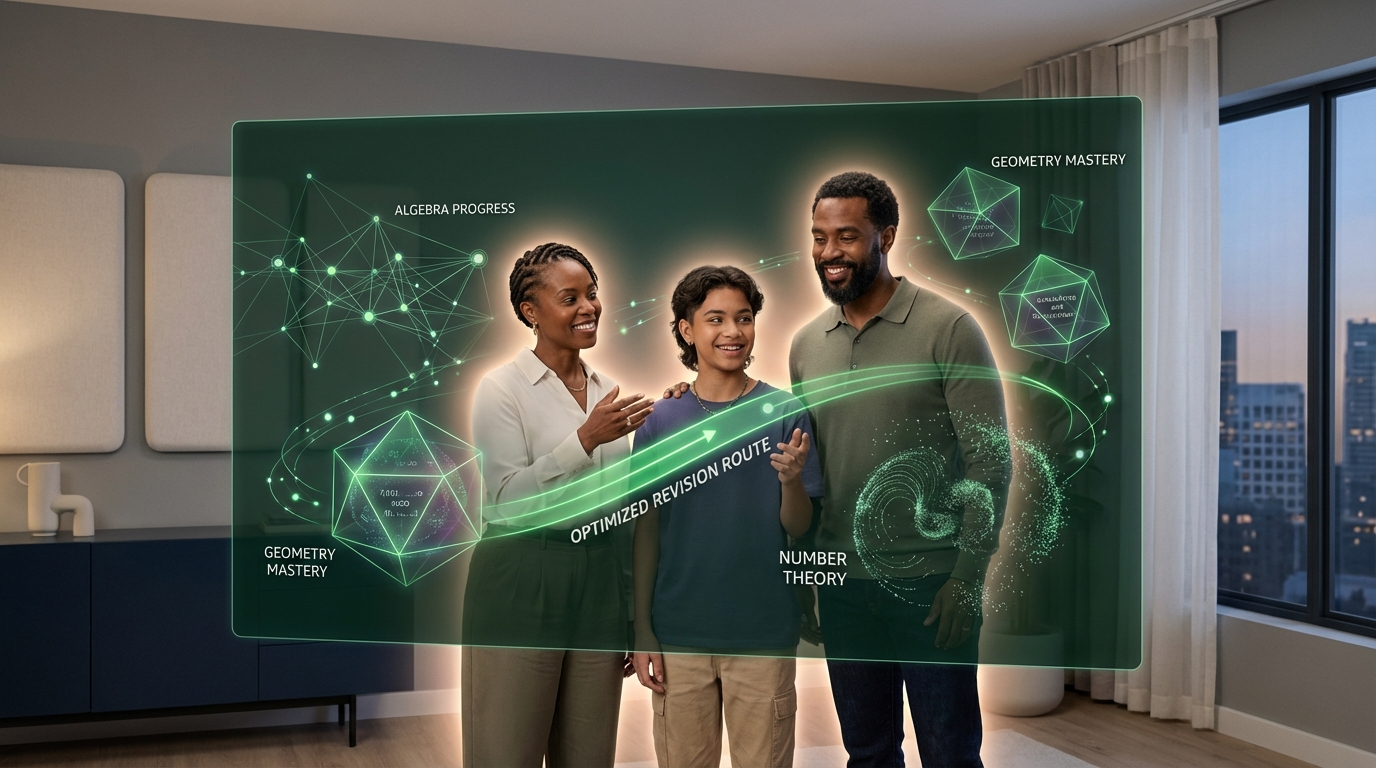
Stop the endless cramming! In 2026, the real secret to GCSE Maths success isn't 'more study,' it's smarter study. AI dashboards are revolutionising how we approach revision, replacing guesswork with data-driven precision.
- Traditional, untargeted revision leads to frustration and the 'effort-reward' gap [1].
- Data-driven precision through AI is redefining effective learning strategies over "more study" [1], [4].
- AI dashboards pinpoint specific deficiencies and generate personalised study pathways [1].
- Platforms with a 'Parent Intelligence Hub' mitigate the 'visibility crisis' [2], [4].
- Strategic focus on AI dashboards ensures mastery of foundational algebra for exam readiness [4].
In this guide:
Why Tracking GCSE Maths Progress with AI Dashboards Matters in 2026
For parents in 2026, the stakes of GCSE Maths success are exceptionally high, profoundly influencing future educational and career pathways. The common anxieties experienced by concerned caregivers — fears of underperformance, ineffective revision investments, or a child becoming overwhelmed — are entirely legitimate. Historically, parents have grappled with a significant 'visibility crisis' [2], often feeling unequipped to identify their child's specific learning gaps or effectively intervene without clear data.
For students, the pressure to achieve a strong GCSE Maths grade is often met with the frustration of untargeted study. The risk of failing or underperforming is a significant psychological burden, impacting self-esteem and future academic choices [2]. In this environment, modern maths tuition, empowered by AI dashboards, offers a transformative solution by shifting from generic approaches to highly precise, data-driven strategies.
The Operational Mechanics of AI Dashboards in GCSE Maths Revision
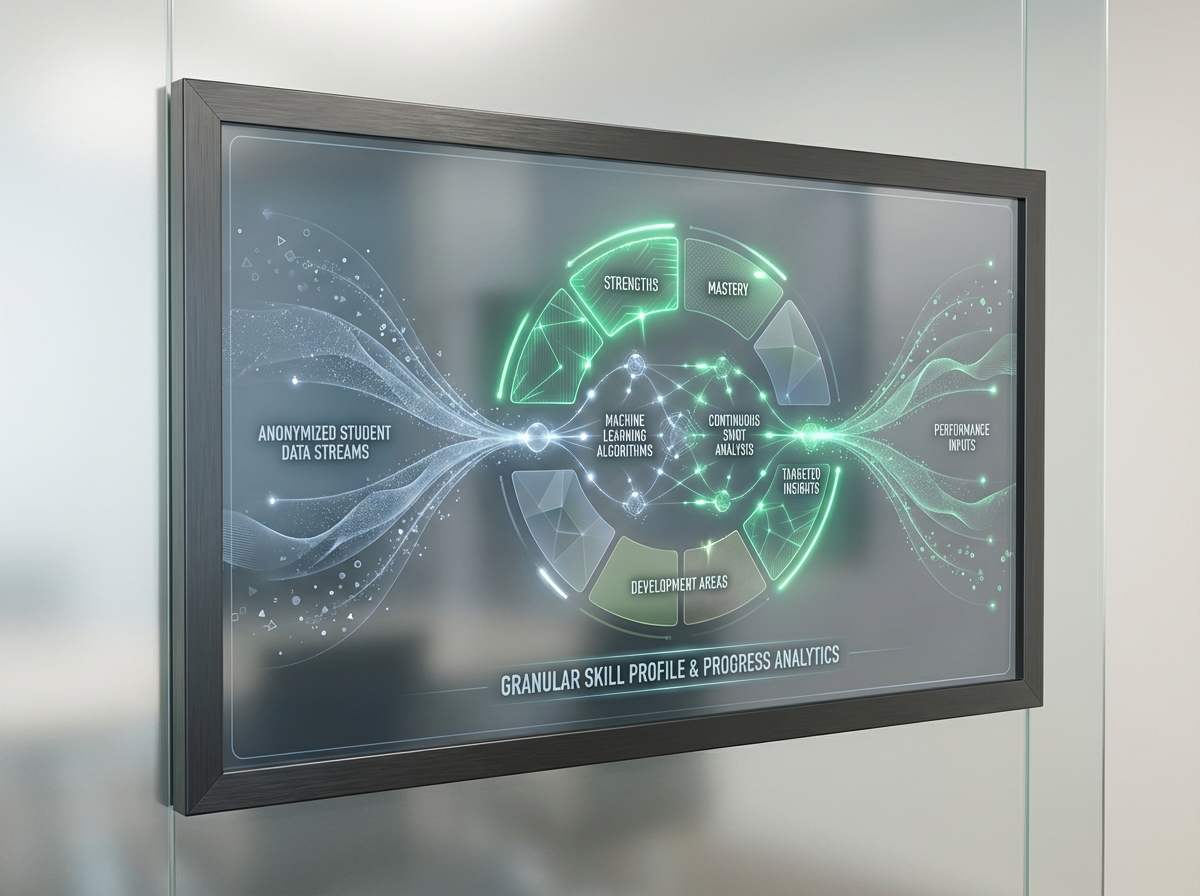
Effective GCSE Maths progress tracking in 2026 necessitates moving beyond subjective assessments. AI dashboards utilize advanced machine learning algorithms to process vast datasets of student performance, identifying nuanced patterns and predicting outcomes with unprecedented precision. These systems leverage computational intelligence to derive actionable insights that human observation alone cannot discern [1].
Consider the operational mechanics: an AI dashboard continuously ingests anonymised data points from practice questions and timed tests. Through supervised learning, the system identifies persistent misconceptions, allowing for targeted intervention. Furthermore, AI platforms can perform a continuous SWOT (Strengths, Weaknesses, Opportunities, Threats) analysis of progress, directly addressing the 'effort-reward' gap [2].
Platforms like Edmoti exemplify this advancement, providing personalised daily revision plans that adapt to a child's specific learning gaps.
Why Traditional, Untargeted Revision Fails for GCSE Maths
The conventional approach of "more study" or the relentless consumption of textbooks is demonstrably inefficient. As of 2026, data indicates that approximately 1.6 million candidates risk underperforming not for a lack of intelligence, but from misdirected revision [2].
Generic revision tools often lack the granularity to diagnose specific deficiencies. For example, platforms like Seneca Learning provide broad courses but may not offer the deeply personalised daily plans required for specific gap identification. Similarly, Maths Genie offers valuable free resources, but without an AI-powered engine, it cannot adapt dynamically to a student's evolving needs [4]. These approaches often result in students wasting time on topics they already understand, leading to burnout.
How Do AI Dashboards Pinpoint Learning Gaps and Optimise Revision Time?
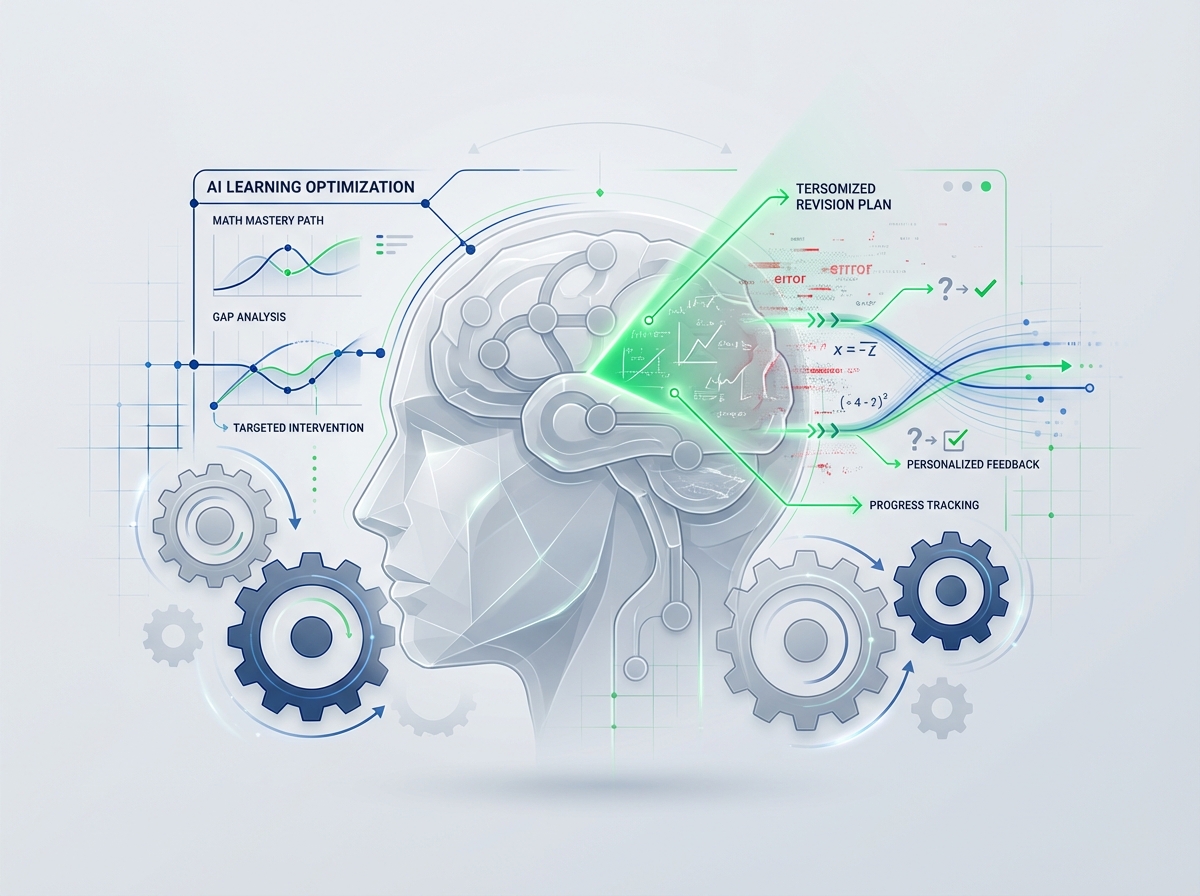
Unlike static revision guides, an AI system continuously assesses performance across various mathematical domains. When a student struggles with rearranging complex algebraic formulae or interpreting statistical diagrams, the AI identifies this as a 'weak area' [1].
- Diagnostic Assessment: Initial AI-driven assessments establish a baseline knowledge map.
- Continuous Monitoring: Every response and error pattern is logged in real-time.
- Predictive Analytics: Algorithms predict future performance and identify foundational weaknesses [4].
- Personalised Pathways: The system focuses intensely on areas requiring improvement, ensuring every minute is productive.
Precision is critical for the 2026 exam landscape, where the mastery of core algebraic foundations is a true driver of marks across Pure Mathematics, Statistics, and Mechanics.
How Do AI Dashboards Significantly Enhance GCSE Maths Performance and Confidence?
The integration of AI dashboards reconfigures a student's learning trajectory. By targeting specific gaps, AI ensures efforts are channelled where they yield the greatest improvement, contrasting sharply with untargeted methods [4].
Enhanced Performance
By prioritising algebraic foundations, AI guides students to build a strong base essential for higher-level topics. Consistent, targeted practice and step-by-step explanations transform confusion into clarity, directly impacting exam scores [4].
Increased Confidence
Confidence stems from mastery. AI dashboards reduce overwhelm by breaking down the vast syllabus into manageable daily plans. Real-time tracking and the Parent Intelligence Hub reinforce effort by allowing parents and students to witness improvements visibly.
The AI Education Architect's Expert Insight: A Contrarian Framework
The premise that more hours of generic revision are the definitive answer to GCSE Maths success is, in 2026, a conventional wisdom ripe for challenge. Our framework proposes a strategic shift from an 'effort-based' revision mentality to an 'efficiency-based' one.
Readers should recognise that untargeted revision fails because it neglects granular needs, leading to an 'effort-reward gap' [1]. By adopting Edmoti's AI-driven approach, parents are empowered with objective, verifiable insights, moving beyond the psychological exhaustion of conventional revision methods.
Frequently Asked Questions
How Does an AI Dashboard Ensure Data Privacy and Safeguarding for My Child?
AI dashboards implement robust security protocols, including end-to-end encryption and anonymisation of performance data. Access is strictly controlled through secure parent dashboards. Content is rigorously vetted to ensure it remains academic and age-appropriate, strictly adhering to GDPR and ethical safeguarding frameworks.
Can an AI Dashboard Truly Replace a Human Tutor for GCSE Maths?
An AI dashboard is a complementary tool rather than a direct replacement. AI excels at 24/7 diagnostic precision and adaptive pathways [2]. While human tutors provide emotional support, Edmoti reduces the need for costly tutoring by pinpointing exactly where human intervention is most impactful.
How Quickly Can I Expect to See Results in My Child's GCSE Maths Progress?
Platforms like Edmoti are designed to build exam readiness in as little as 30 days. By eliminating wasted time on mastered topics and focusing on weak area recovery, parents gain immediate visibility into progress via the Parent Intelligence Hub.
Conclusion
In 2026, the imperative is no longer merely to study more, but to study smarter. By transitioning towards precision planning enabled by AI, parents are empowered with data-driven insights. This shift addresses parental anxieties and student frustrations, fostering genuine confidence and superior performance in GCSE Maths.